A First Ride Through an Unfamiliar Neighborhood
Plan a first ride through an unfamiliar neighborhood with a simple decision route, safe places to pause, and a clear way to return when conditions change.
A first ride through an unfamiliar neighborhood works best as a series of small decisions, not a route you must finish. Before you leave, choose a recognizable starting point, one place to reassess, and a return option that does not depend on finding your way through every block.
Think of the ride as a way to learn how the neighborhood connects. You can notice which streets feel comfortable, where paths lead, and which crossings are worth avoiding without trying to cover the whole area.
How should you shape a first ride through an unfamiliar neighborhood?
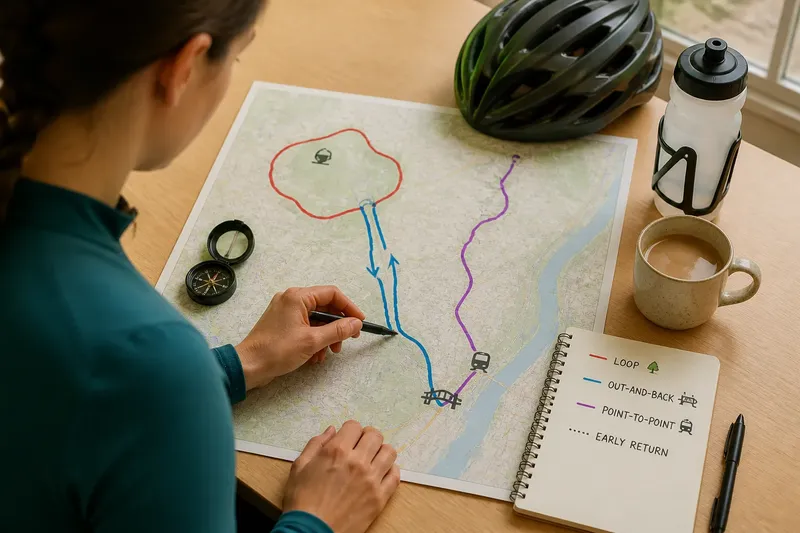
Start near a place you already know, such as a library, park, or shopping street, and choose an area with more than one way back. A map can help you spot barriers such as rail lines, waterways, and wide roads before you encounter them on the bike.
Instead of drawing a complete loop, identify a simple sequence: a familiar approach, a place to pause, and a return direction. This leaves room to change course if traffic, weather, or your comfort level differs from what you expected.
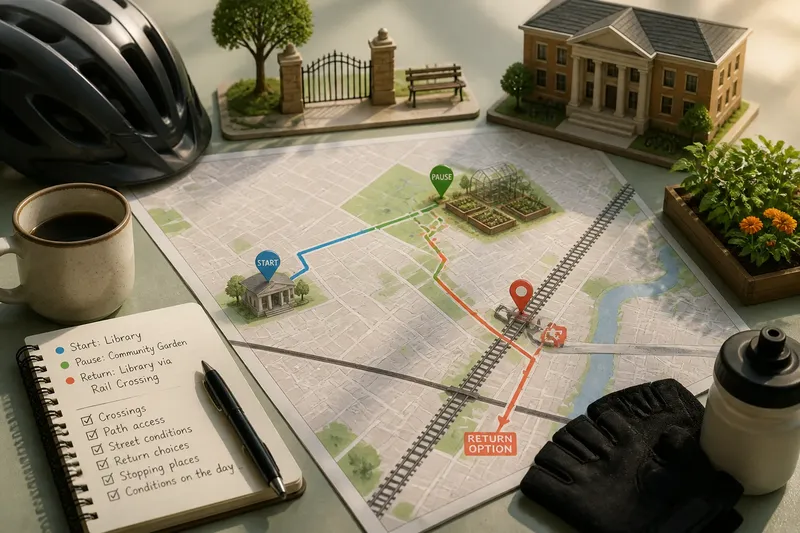
Say you start at a neighborhood library, plan to reach a community garden, and see a rail line between the garden and home. You check the map beforehand and identify a legal crossing near the library side of the area; at the garden, if the route toward that crossing still feels comfortable, you head back that way, and if it does not, you use the familiar approach. The observable result is a clear return choice without needing to improvise beside the rail line.
What should you check before choosing a route?
- Crossings: Check whether the route crosses a wide or busy road; if there is a comfortable legal crossing, keep it as an option, and if not, choose streets that stay on your side.
- Path access: Check whether a path entrance is open and reachable from the street; if access is clear, consider it, and if it is closed or uncertain, plan a street alternative.
- Street conditions: Check a local cycling map for lanes, paths, and traffic restrictions; if the map suggests a calm connection, consider it, and if the route depends on a stressful segment, redraw it.
- Return choices: Check for at least one familiar way back from the area you plan to explore; if one is clear, keep it in mind, and if not, shrink the area or choose a different starting point.
- Stopping places: Check for a public spot where you can get fully out of the way; if one is available, use it for a map check, and if not, continue to a safer place before stopping.
- Conditions on the day: Check signs, traffic, and access as you ride; if the planned street feels manageable, continue, and if it feels uncomfortable, take a safe, legal alternative or turn back.
Maps cannot show every condition at street level. Follow posted signs and local rules, and make a fresh decision when you reach a crossing or path entrance.
How do you choose landmarks that help with decisions?
Pick landmarks that are easy to identify from the street and useful for orientation: a park gate, a library entrance, a bridge, or a public square. Pair each with a nearby street or feature, such as “the library at the corner by the ball field,” so the cue remains clear if the building name slips your mind.
Give the landmarks different jobs. One can mark where you enter the area, another can offer a place to pause, and a third can help point you back toward familiar streets. Treat them as reference points, not required stops.
How should you decide when to turn back?
Choose a natural point to reassess, such as the far side of a park or a quiet intersection near your last landmark. Make sure you can change direction there without an abrupt maneuver or a difficult crossing.
At that point, consider how the streets feel, whether you still have time and energy for the return, and whether the way back remains clear. If any answer gives you pause, turn back; continuing is optional, not the measure of a successful ride.
What if plans change during the ride?
What if a street feels busier than expected?
Use the next safe opportunity to leave it for a calm side street or designated path. If no comfortable alternative appears, turn back rather than pressing onward.
What if you lose your sense of direction?
Stop in a safe place and use a map to locate a familiar landmark or major feature. Choose a simple route toward recognized ground instead of adding unfamiliar turns while stopped only briefly or still in traffic.
What if you want to keep exploring?
Pause at your planned reassessment point and check your comfort, time, and return options. If those still look good, extend the ride by one clear section; if not, head back.
What if you want to stop early?
Take the simplest familiar route toward home or another safe place to pause. Ending early is a sensible adjustment when the street conditions or your energy changes.
How can you navigate without checking your phone while moving?
Before starting, save a map for offline use if you expect a weak signal, or write a short sequence of turns on a note. A securely mounted phone can help with orientation, but stop somewhere safe before reading or changing the map.
If you miss a turn, continue to a suitable place to change direction. Do not make a sudden crossing or reverse course in the road. A plain-language route such as “follow the park edge, turn by the library, return toward the creek path” is often easier to remember than a long list of street names.
What should you remember for the next ride?
After you get home, note only details that could change a future decision: a comfortable crossing, a confusing path entrance, or a street you would avoid. Keep the note tied to a landmark so you can find the relevant place on a map.
For your next first ride through an unfamiliar neighborhood, use those observations to choose a clearer reassessment point or a better return option. A small note about one useful connection can do more than a record of every turn.